Wednesday, February 6, 2008

Fuel Cell Powered Handsets

NEC is supposedly set to begin pushing fuel cell-powered handsets The handset features a touchscreen display and what appears to be able to potentially recharge the handset once the fuel has all been used. Color choices seem to be a bit “girly” but it appears the liquid provides the color, so perhaps there will be some additional colors when it’s released sometime this year. However, there has been no word on any specs, pricing, or networks.


The electrochemical device that we are all familiar with is the battery. A battery has all of its chemicals stored inside, and it converts those chemicals into electricity. This means that a battery eventually "goes dead" and you either throw it away or recharge it. With a fuel cell, chemicals constantly flow into the cell so it never goes dead, as long as there is a flow of chemicals into the cell, the electricity flows out of the cell. Most fuel cells in use today use hydrogen and oxygen as the chemicals.


Alicia

Tuesday, February 5, 2008

The Melting Point


The predicted effect of global warming for the environment are varied. Expected climate changes, because of global warming have the potential to lead to future large-scale and possilby permanent changes in our climate; resulting in impacts at continental and global scales. Increasing tempuratures are likely to lead to increasing precipitation, but the effects on storms are less clear. Over the course of the 20th century, evaportation has declined worldwide; this is thought by many to be explained by gloabl dimming. As the climate growns warmer and the causes of global dimming are reduced, evaporation will increase as a result of warmer oceans.

Global warming has a huge effect on the oceans as well. With an increasing average global tempurature, the water in the oceans will expand in volume, and the additional water enters them which has previously been locked up on land glaciers. The world's oceans soak up much of the carbon dioxide produced by living organisms, either as dissolved gas or as skeletons or tiny marine creatures that fall to the bottom to become chalk or limestone.

Global warming again has many effects and in some ways can hurt the ecosystems more than anything on earth. Atmospheric carbon dixide is rare in comparison to oxygen. This carbon dioxide starvation becomes apparetn in photorespiration, where there is so little carbon dioxide that oxygen can enter a plants chloroplast and takes the place where carbon dioxide would normally be.

In historic times, glaciers grew during the Little Ice Age, a cool period from about 1550 to 1850. Until around 1940, glaciers around the world retreated s the climate became warmer. Glacier retreat declined and reversed, in many cases, from 1950 to 1980 as a sight of global cooling occured. Except for the ice caps and ice sheets of Arctic and Antarctic, the total surface area of glaciers worldwide has decresed 50% since the end of the 19th century.


Alicia

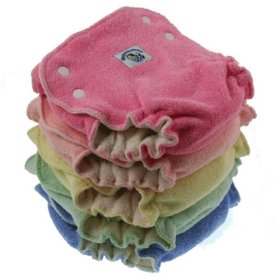
Cloth Diapers vs. Disposable Diapers


We've all been in them and many of us will have to use them when we become parents. Most people know that diapers are not a cheap necessity, but what some people might not know is that there is a second option. Reusable cloth diapers are more environmental-friendly and you can save money by using them! I am aware that by using cloth diapers, a parent will need to use more water to wash the diapers. But, a few environmental reasons for choosing cloth diapers over disposable diapers are :
  • 1 billion trees are destroyed in one year to make disposable diapers. That's 4.5 trees per child.
  • It takes between 250 and 500 years for a diaper to decompose.
  • 18 billion disposable diapers are used in the U.S. each year. That's enough to stretch to the moon and back 9 times!
  • Diapers are the third largest single consumer item in landfills.
  • When a parent uses cloth diapers over disposable diapers, 1 ton of garbage is being conserved for that baby
When deciding whether or not to use cloth diapers over disposable diapers, take the following into consideration:
  • You will either use 7,000 disposable diapers or 80 cloth diapers
  • A disposable diaper is used for 2 hours, a cloth diaper is used for 3 years
Miranda

Rechargeable Batteries

If people sometimes forget to recycle their plastic bottles, metal cans, and paper, do you think consumers think about recycling batteries?
The Rechargeable Battery Recycling Corporation (RCBC) is helping Americans recycle their batteries properly. These batteries can be found in cell phones, laptops, remote controlled toys, and many other electronics. 
You can drop off these recyclable batteries at the following locations in South Bend: Lowe's, RadioShack, US Cellular, Verizon Wireless, and Sears Repair Services.
Although I have never properly recycled batteries, I've been told that I should. In order to keep chemicals out of our solid waste stream, it is necessary for each of us to take our part in helping to recycle rechargeable batteries. 

  • RBRC is a non-profit public service trying to make the environment better.
  • In the last 14 years, RBRC has recycled more than 42 million pounds of batteries.
  • More than 6.3 million pounds were recycled in 2007.
  • This organization has earned several awards for their efforts.
Miranda

Monday, February 4, 2008

Water Pollution

Beach pollution originates with an array of sources including human, animal, agricultural and industrial waste. More pollution also comes from leaked motor oil and gasoline along with other contaminants flushed out to coastal regions. Swimming in contaminated beach water can expose people to harmful chemicals bacteria and viruses. Swimming in these areas can have harmful effects to the body.


Beach pollution is a problem in all coastal states. In 2002, beach pollution caused “at least 12,184 closings and swimming advisories at ocean, bay, Great lakes, and some freshwater beaches.” This pollution is harmful to the environment and swimming in this type of contaminated beach waters is dangerous to one’s health. “Most U.S. beach closings result from high levels of harmful microorganisms found in untreated or partially treated sewage.” Rainwater also contributes to pollutants as it washes/runoff into beaches and coastal areas. Other pollution contributors include boating wastes and malfunctioning septic systems. I can think of one instance when swimming on the coast in Florida and having dead fish and birds all down the shore line. It was not a pleasant swimming area. The smell was horrific and the sigh was not a picture perfect beach scene.

  • In 2002, beach pollution prompted at least 12,814 closings and swimming advisories at ocean, bay, Great Lakes, and some freshwater beaches.

  • Swimming-related illnesses are usually not severe or life threatening, but can cause significant discomfort. Young children, the elderly, and people with impaired immune systems are at more of a risk than healthy, mid-aged people.

  • Simple ways individuals can help to clean their local beaches include conserving water, using natural fertilizers, keeping septic systems functioning properly, disposing of boat wastes appropriately, and supporting laws that promote beach water monitoring and cleanup of pollution sources.


Ashlie

"Make Every Drop Count"


"I strongly that the quality of life we enjoy depends on the quality of our environment we live and work in. We therefore have a responsibility to act in a manner to prevent pollution to safeguard the environment for future generations to come."

Most people do not realize the water that one uses each day. I know I don't. I use water several times a day from washing my hands, cooking to laundry. With out taking a second to look back and think about it, I have no clue how much I waste.I am one to be called a fish...live on the lake and use it every day in the summer, drink well over 8 glasses a day, take long showers, and worst of all my family owns a bed and breakfast so the washer is constantly running (many times over 20 loads a day). I do recycle and try to reduce and reuse but water is something that I admit take for granted. I need to work on "making every drop count". What do you do to save water?

Brushing teeth 3 gallons a day
Shower 40 gallons every 10 minutes
Bath 20 gallons
Toilet 28 gallons a day per person
Washing machine 45 gallons per load


Ashlie


http://www.awwu.biz/website/Admin/kitchen_conservation.htm

Our First Blog

Reduce Reuse Recycle.

Alicia Miranda and Ashlie
http://www.lincoln.gov.uk/imglib/recycle%20sign.jpg